
New Payday Super rules from 1 July 2026: A guide for employers
From 1 July 2026, one of the biggest payroll changes in years will come into effect for Australian businesses.
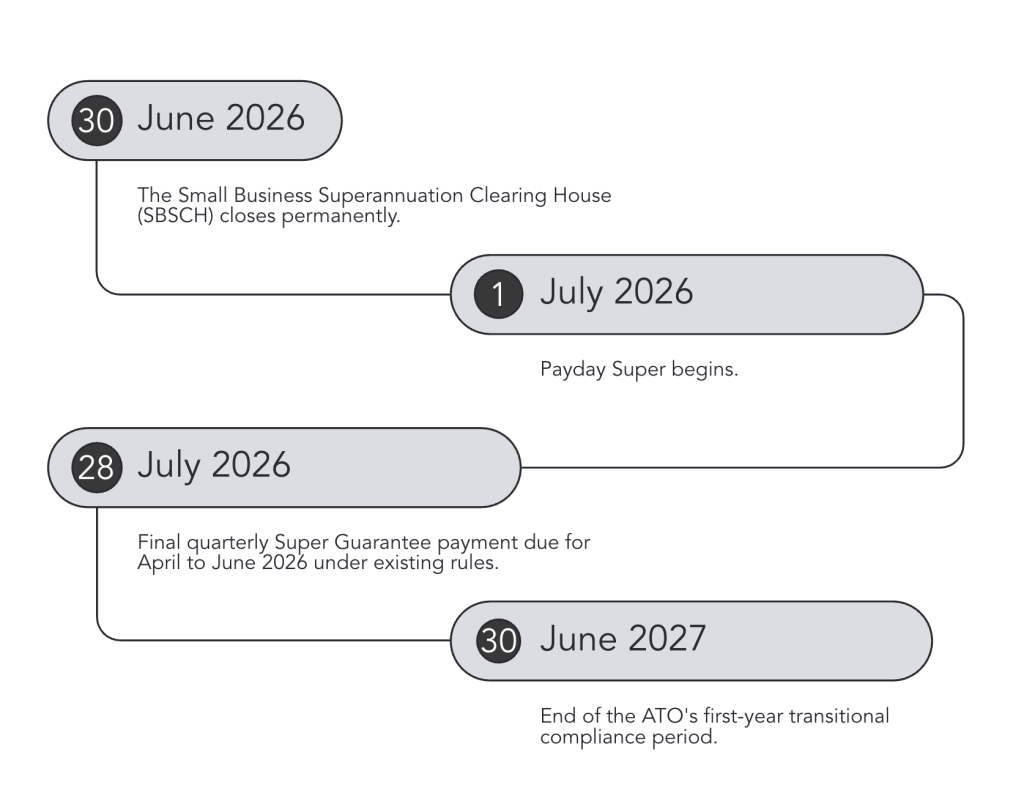
Under the new Payday Super rules, employers will no longer make superannuation guarantee (SG) payments quarterly. Instead, superannuation will need to be paid each time employees are paid, with contributions required to reach the employee’s super fund within 7 business days of payday.
For many businesses, the change will be more than simply adjusting payment dates. It has implications for payroll processes, cashflow planning, payroll software, and internal systems.
While the amount of superannuation employees receive is not changing, the way employers manage and process those obligations will.
DOWNLOAD FACT SHEET

What is changing?
Currently, employers generally pay compulsory super contributions quarterly.
From 1 July 2026:
- Super guarantee contributions must be paid each pay cycle
- Super funds must receive contributions within 7 business days of payday
- The Small Business Superannuation Clearing House (SBSCH) closes permanently
- Single Touch Payroll reporting expands
- New penalty rules and SG charge calculations apply for late payments
The SG rate itself remains unchanged at 12%.
Why is Payday Super being introduced?
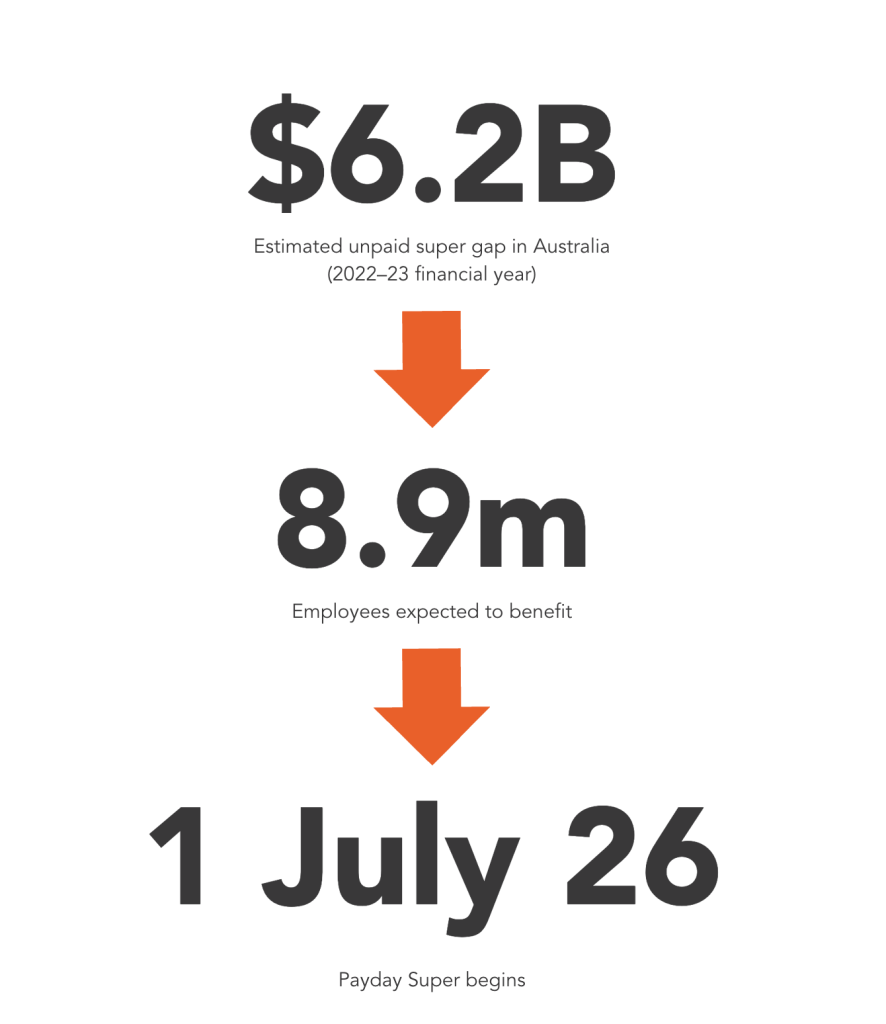
The Government introduced Payday Super to reduce unpaid and underpaid superannuation and help employees receive their retirement savings sooner.
According to ATO estimates, unpaid super obligations reached approximately $6.2 billion in the 2022–23 income year.
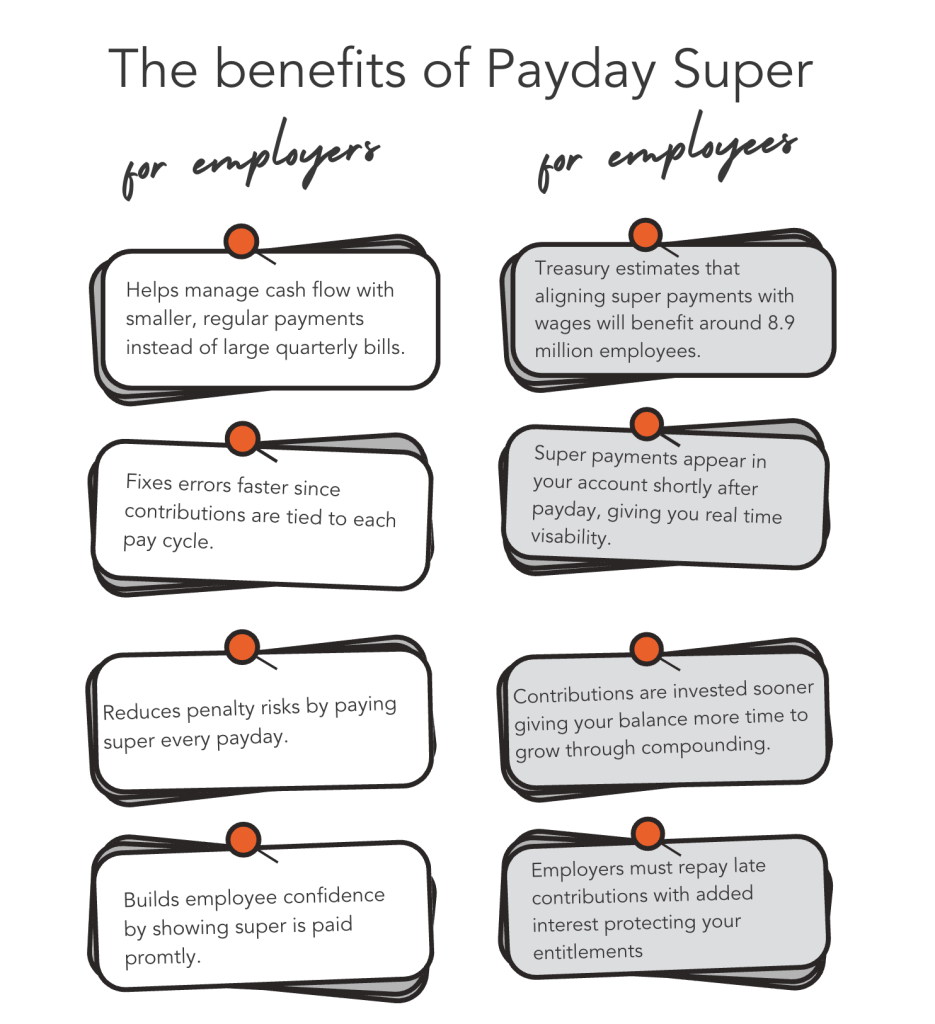
The reform is expected to benefit around 8.9 million employees and is designed to improve visibility, reduce missed payments and strengthen compliance.
What does this mean for employers?
For many businesses, the biggest change is timing.
Previously, employers could build super obligations across a quarter and pay them at set intervals. Under the new rules, super becomes part of the regular payroll cycle.
That means businesses paying:
- Weekly wages will process super weekly
- Fortnightly payroll will process super fortnightly
- Monthly payroll will process super monthly
If you already use payroll software such as Xero Auto Super, the process itself may feel familiar. The larger adjustment for many businesses is likely to be planning for more frequent payments and understanding the impact on cashflow.
Businesses should also factor in clearing house processing times. Making a payment does not automatically mean the obligation has been met. The super fund must actually receive and allocate the contribution within the required timeframe.
Important dates to know
What happens if payments are late?
The new rules introduce a revised Superannuation Guarantee Charge (SCG) framework. The SGC applies when amounts aren’t received by a super fund within 7 business days of payday (unless an extended timeframe applies, such as for new employees). The SGC:
- is assessed by the ATO
- is calculated based on QE
- includes interest that compounds daily at the general interest charge rate
- includes an administrative uplift, which can vary based on an employer’s history of meeting super guarantee obligations and may be reduced by a voluntary disclosure
- is tax deductible.
Penalties

From 1 July 2026
Penalties are 25% or 50% of the unpaid SGC, depending on any prior penalties.
You can read more about missed or late Payday Super penalties here.
The ATO has also outlined a transitional compliance approach during the first year, however this should not be viewed as a grace period.
The legal requirement remains the same. Contributions still need to be made on time.
DOWNLOAD FACT SHEET
Five things businesses should do now

1. Review your payroll software
Check whether your current software supports more frequent super processing and reporting requirements.
2. Monitor your cashflow
Moving from quarterly payments to each pay cycle may require changes to budgeting and cashflow management.
3. Check your clearing house arrangements
If you currently use SBSCH, now is the time to identify and test an alternative solution.
4. Check and update employee information
Ensure super fund details are current and onboarding processes are updated.
5. Get your processes ready
Clarify who is responsible for processing payroll and super contributions and establish contingency plans for staff leave periods.
How MWM Advisory can help
Payday Super is more than a payroll change. It affects systems, processes and cashflow management.
At MWM Advisory, we can help you:
• Review payroll software and super processing systems
• Assess cashflow impacts
• Review onboarding and payroll processes
• Support implementation and compliance requirements
• Train payroll and finance teams
Download our complete Payday Super Fact Sheet and FAQ Guide, or contact our team to book a Payday Super readiness review.
DOWNLOAD FACT SHEET
MWM Advisory – Client Fact Sheet – Payday Super_Downloadable
Follow us for more blogs, FAQ’s and social media posts about payday super.
Until next time, all the best.
James and the MWM Team